-->

Welcome to our Coding with python Page!!! hier you find various code with PHP, Python, AI, Cyber, etc ... Electricity, Energy, Nuclear Power

Showing posts with label #Python. Show all posts

Tuesday, 2 May 2023

Step by Step how to access the hosted Jira API via python

Here are the step-by-step instructions for accessing the hosted Jira API via Python:

  1. Install the required Python libraries:

    • requests
    • jira

    You can install them using pip:

    pip install requests jira
  2. Log in to your Jira account and navigate to the API tokens page (Settings > Security > API tokens). Generate a new API token and copy it.

  3. Create a new Python script and import the required libraries:

    python
    import requests from jira import JIRA
  4. Create an instance of the JIRA class and pass the Jira URL and API token to it:

    python
    options = { 'server': 'https://your-jira-instance.atlassian.net' } api_token = 'your-api-token' jira = JIRA(options, basic_auth=('email@example.com', api_token))

    Replace your-jira-instance with the name of your Jira instance and email@example.com with your Jira login email.

  5. Test the connection by retrieving a list of issues from Jira:

    python
    issues = jira.search_issues('assignee=currentuser()') for issue in issues: print(issue.key)

    This will print the keys of all issues assigned to the current user.

  6. You can now use the Jira API to perform various operations, such as creating, updating, and deleting issues. Refer to the JIRA library documentation for more details on how to use the API.

That's it! You can now access the hosted Jira API via Python.

Tuesday, 15 February 2022

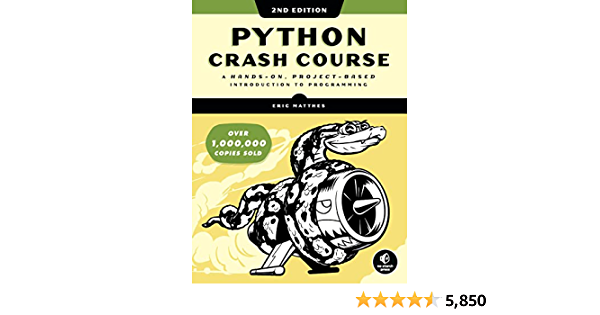
Download Python Crash Course: A Hands-On, Project-Based Introduction to Programming, 2nd Edition

 Python Crash Course, 2nd Edition: A Hands-On, Project-Based Introduction to Programming

Python Crash Course, 2nd Edition: A Hands-On, Project-Based Introduction to Programming


Link - https://fr.b-ok.africa/dl/5416472/bee132

#Python, #100DaysOfCode, #CodeNewbies, #WomenWhoCode, #DevOps, #code, #Coding, #LearnToCode, #DataAnalytics, #DataScience, #MachineLearning, #AI, #programming, 

Monday, 25 October 2021

Using Data To Make Better Decisions

All about Agile, Ansible, DevOps, Docker, EXIN, Git, ICT, Jenkins, Kubernetes, Puppet, Selenium, Python, etc


How many tennis balls could you fit in all of the skyscrapers in New York City? How many gummy bears could you fit in an airplane? How long would it take to fill the Mariana Trench with peanut butter? 

Like most people, you’d probably need some time and maybe a whiteboard to guess these answers. Not only are the questions difficult to imagine and rationalize, but also there’s a lot of relevant background information needed to be able to make an accurate guess.

Without collecting all relevant data, any answer is a guess.

Imagine watching any sports game where you could only see one team and no scoreboard. You would be able to guess how each team is doing from positioning and reactions, but it would be difficult to say confidently which team is winning or who is more likely to win the entire game. It would be even more difficult to win bets against someone else watching normally on TV being spoon-fed a plethora of statistics and hearing the opinions of professional commentators. 

Despite the unfairness of this competition, this is how many people invest in stocks. Dark Pools can consist of more than half of the overall trade volume for a stock, and yet despite this huge imbalance, many people don’t know they exist let alone monitor their activities. Gaining access and utilizing all the information available before making critical decisions can level the playing field and facilitate educated decisions.
Data can help us make sense of big numbers and simplify complex ideas. Pluto is roughly 3 billion miles away, so how long would it take to walk there? About a billion hours, which is longer than watching all the content on all major streaming sites back to back 20,000 times. While the number and the analogy mean the same thing, one is substantially easier to understand intuitively than the other. 

Data explanation and visualization is a crucial component of understanding complex data points.


Financial data is infamously one of the largest data sets in the world and endlessly complicated, so seeing it in easy-to-process graphs instead of raw metrics helps elucidate. It’s difficult to visualize two numbers of orders of magnitude apart, but it’s easy to see how big one circle is against another.
Likewise, it’s almost impossible to rationalize numbers without context for what they mean. Financial data is rife with jargon and acronyms that require a dictionary to read, let alone understand. Being able to process this information is knowing not just what the words mean, but also how it affects a company and how it compares to other similar companies. 

One of the best ways to use data is not as a standalone item in a complex sheet but as a living, breathing, dynamic guide for making better decisions. Data in isolation is hard to understand intuitively and even worse to try to act upon. Combined with visualizations, it can form a complete picture for faster understanding and superior intuitive answers.

Not all data is created equal.


This paradigm is far from original, with many of the most prominent data sources using citations and best practices to try to eliminate the uncertainty. One of the largest crypto data providers revealed that 65%-95% of all their data was inaccurate and untrustworthy. In the wake of the LIBOR scandal, cracks in the financial system were exposed and the underbelly of market manipulation was revealed. Recently, payment for order flow was popularized, selling people’s trades to big institutions and allowing them to take profit away from investors. Far from novel, these are just several examples of data being difficult to trust. 

The commonality from all three of these is a fundamental agency problem; each of these groups stood to gain financially from manipulating their data or failing to correct incorrect data. The solution is to find data sources that are fundamentally incentivized to provide accurate data. Most brokers provide access to financial data, but often there is a conflict of interest, such as a broker selling their own stock, or fees on trading either explicit or invisible through slippage. 

For this reason, it’s essential to carefully evaluate the trustworthiness of data sources and not take information at face value, especially when critical decisions are being made from it. Healthy skepticism and asking if there is a conflict of interest can expose early on whether a data set is purely analytical or might be inaccurate and skewed.

Data is one of the most valuable resources in the world.


Almost half of the top seven biggest companies in the world use data as their primary product for good reason. Making informed, objective decisions can eliminate uncertainty on correct choices and often guarantee the best possible outcomes. Learning to make these decisions off of comprehensive, well understood and trustworthy data can drastically increase the effectiveness of any decision and bring order to an otherwise chaotic world.

Wednesday, 20 October 2021

ADVANTAGES OF HIGH-QUALITY PERIMETER SECURITY SYSTEMS

All about Agile, Ansible, DevOps, Docker, EXIN, Git, ICT, Jenkins, Kubernetes, Puppet, Selenium, Python, etc

When browsing the market for security systems which work to protect the entire perimeter or your business premises – look no further than perimeter security systems.

With a range of types to choose from, including security bollards, high security gates, vehicle barriers, you can be sure your premises will be protected from unauthorised visitors and thieves. This will ensure your business is safe from theft and intrusion or damage from trespassers. These perimeter security systems are often favoured by large companies with many access points to their sites. Hörmann, one of Europe’s leading manufacturers of door solutions also offering perimeter security systems, have identified the advantages of perimeter security systems. Highlighting why you should invest in high-quality solutions to protect your site. 

A Wide Choice of Security Solutions to Choose From 

Security_Solutions.jpeg

When searching for your perfect perimeter security system, you will notice just how much choice you have! Which is great, considering no two premises are the same. 

Below are just some solutions you can choose from: 

  • High security barriers 
  • Security bollards 
  • CCTV solutions 
  • Mobile vehicle barriers 
  • Automated sliding gates

Have Control Over Who Enters Your Premises 

The main advantage of installing perimeter security systems is the ability it provides you to control who enters your premises. Giving you the choice to permit access to only those who have been authorised and preventing unknown visitors from gaining access without approval. It is beneficial to cover the entire perimeter of your premises to ensure every area is covered. You could do this using a variety of types of perimeter security, determining your main entrance and smaller side entrances. In most cases, companies will choose to prioritise their main entrances with the highest levels of security. Followed by smaller systems in place for side entrances where footfall and traffic levels are low. 

Protect your Premises, Property and Staff 

This may seem obvious, but many people underestimate the potential for theft on their premises. Particularly if they believe their location to be safe. Despite where you are located as a company and if you have or have not been targeted by thieves before, perimeter security systems are paramount in providing protection for your premises, property, and staff. Investing in these systems in the best way to prevent theft, which could be both costly and detrimental to your company’s operations. 

These measures will also ensure your staff and visitors feel safe on site, providing peace of mind. This is particularly important if you have staff on site overnight when your premises are much more likely to be targeted. 

Perimeter Security Systems Can Be Budget Friendly 

When considering security systems most people will assume this is going to take a large chunk out their budget. Think again! Perimeter security systems can be customised to meet both your needs and your budget. Working with manufacturers you can determine the features which are most important to you and keep within your budget. If you need a low-cost solution to perimeter security systems, many will opt for a simple barrier or manual sliding gates. 

Control the Flow of Moving Traffic 

Security_Parameters.jpeg

If you manage a busy site with large amounts of both traffic and footfall, security systems like bollards and barriers are great for controlling this flow of moving traffic. This can become useful in other areas, like public spaces for events, where large gatherings are predicted to take place. Installing bollards or turnstiles can help to prevent dangerous rushes amongst crowds. Working to move people quickly but orderly through access points. 

#BigData #Analytics #frontend #MachineLearning #CyberSecurity #Python #RStats #TensorFlow #JavaScript #CloudComputing #Serverless #Linux #database #DataScience #100DaysofCode #ML #data #streaming #devops #php #css #java #AI #digital #opensource

WHAT HAPPENS WHEN BLOCKCHAIN, IOT, AND AI CONVERGE?

All about Agile, Ansible, DevOps, Docker, EXIN, Git, ICT, Jenkins, Kubernetes, Puppet, Selenium, Python, etc

Blockchain, internet of things (IoT), and artificial intelligence (AI) are driving the digital transformation of the post pandemic era.

The inevitable convergence of blockchain, IoT, and AI can form an impactful combination of security, interconnectivity, and autonomy to revolutionize the way things are done.

‘Synergy’ is a word that refers to a collaboration of entities that creates an impact much greater than that possible by the individual entities on their own. The convergence of blockchain, IoT, and AI is just that - a combination of technologies that have the potential to redefine the way businesses, industries, and even economies function, way more than they are already doing. A few applications and concepts have already seen an overlap between these technologies, with promising results. An example of this is the combination of AI and blockchain to manage UAV air traffic, making mass autonomous flight safer. This application alone, upon materialization, will redefine quite a number of industries like aviation and logistics. Thus, it’s not hard to imagine the impact that the combination of blockchain, IoT, and AI can have on the world. To understand the implications of the coalition of these technologies, it is first important to understand what they individually bring to the table.

Blockchain, IoT and AI Assessed Individually

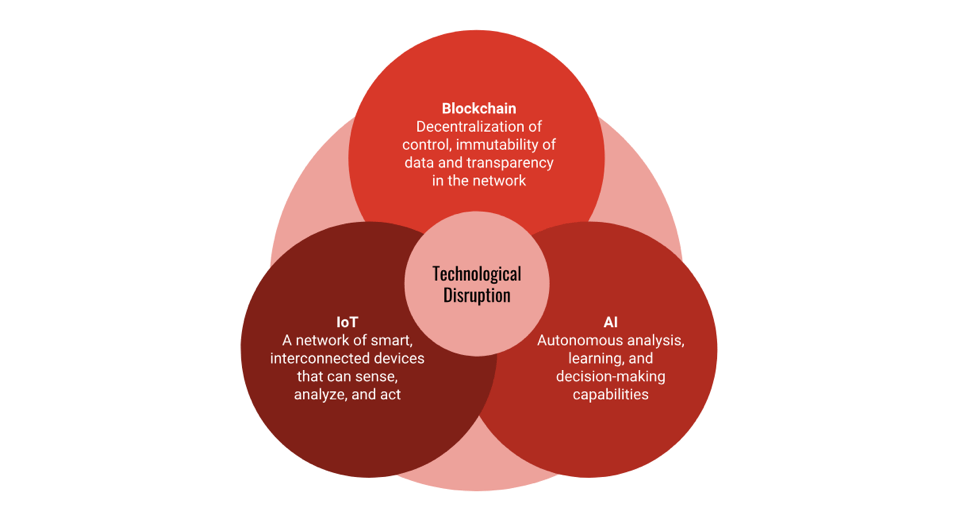
Blockchain_IoT_and_AI_Assessed_Individually.png

Blockchain, the foundational technology for the cryptocurrency Bitcoin, enables a large number of computers to collectively perform computational tasks together and store information in a decentralized, immutable, and universally accessible manner. Various organizations, consortia, as well as industries, are considering using blockchain as a platform for consensus to democratize the decision-making processes among partners. 

The internet of things (IoT) provides seamless interconnectivity among different everyday objects armed with sensors, microprocessors, and transducers to create a network that can independently sense and gather data, continually analyze it, and perform programmed tasks when the situation calls for it. 

Artificial intelligence (AI) gives full autonomy of data analysis, decision-making and action to computers or other smart devices. It can replicate and even exceed human computational and cognitive capabilities under certain conditions, businesses are using AI to automate mainly repetitive, routine processes that may require heavy amounts of data processing and quick decision-making based on pure logic.

Combining Blockchain, IoT, and AI

The convergence of blockchain, IoT, and AI can enable organizations to maximize the benefits of each of these technologies while minimizing the risks and limitations associated with them. As IoT networks comprise a myriad of connected devices, there are numerous vulnerabilities in the network, leaving it prone to hacker attacks, fraud, and data theft. To prevent security issues, AI powered by machine learning can proactively defend against malware and hacker attacks. The security of the network and the data can be further enhanced by blockchain, which can limit illicit access and modification of the data on the network. AI can also enhance the functional capability of the IoT network by making it smarter and more autonomous. 


A potential case that demonstrates the convergence of blockchain, IoT, and AI is Fujitsu’s algorithm to measure workers’ heat stress levels. The algorithm constantly monitors workers’ physiological data such as temperature, humidity, activity levels, pulse, etc. using IoT wearables and sensors to track the correlation between different factors with workers’ health. The analysis can help the company improve working conditions for employees, and prevent them from having severe work-induced health issues. The addition of blockchain to this system can help to keep track of more personalized data by ensuring privacy or can help disburse health insurance amounts using smart contracts. Although the expected impact of the convergence of blockchain, IoT, and AI is exciting to think about, existing applications of these technologies are far from perfect. While 61% of companies claim to have adopted AI, their applications are still in the early stages and nowhere near the levels of sophistication required to achieve real transformation.

The same can be said for IoT and blockchain. However, with increased interest, investment, and innovation, the convergence of blockchain, IoT, and AI will eventually be a reality.

#ArtificialIntelligence #technology #innovation #5G 

#Python #coding #BigData #coding #CyberSecurity #Future #devops #java #CloudComputing #django   #100DaysOfCode #bot #TensorFlow #COVID19 #RHOP #ITC

Machine Learning For Absolute Beginners: A Plain English Introduction

All about Agile, Ansible, DevOps, Docker, EXIN, Git, ICT, Jenkins, Kubernetes, Puppet, Selenium, Python, etc
machine-learning-absolute-beginners-introduction-2nd.pdf

Machine Learning For Absolute Beginners: A Plain English Introduction (Second Edition) (Machine Learning From Scratch Book 1) Kindle Edition

Featured by Tableau as the first of "7 Books About Machine Learning for Beginners."

Ready to spin up a virtual GPU instance and smash through petabytes of data? Want to add 'Machine Learning' to your LinkedIn profile?

Well, hold on there...

Before you embark on your epic journey, there are some high-level theory and statistical principles to weave through first.
But rather than spend $30-$50 USD on a dense long textbook, you may want to read this book first. As a clear and concise alternative to a textbook, this book provides a practical and high-level introduction to machine learning.

Machine Learning for Absolute Beginners Second Edition has been written and designed for absolute beginners. This means plain English explanations and no coding experience required. Where core algorithms are introduced, clear explanations and visual examples are added to make it easy and engaging to follow along at home.

New Updated Edition
This major new edition features many topics not covered in the First Edition, including Cross Validation, Ensemble Modeling, Grid Search, Feature Engineering, and One-hot Encoding. Please note that this book is not a sequel to the First Edition but rather a restructured and revamped version of the First Edition. Readers of the First Edition should not feel compelled to purchase this Second Edition.

Disclaimer: If you have passed the 'beginner' stage in your study of machine learning and are ready to tackle coding and deep learning, you would be well served with a long-format textbook. If, however, you are yet to reach that Lion King moment - as a fully grown Simba looking over the Pride Lands of Africa - then this is the book to gently hoist you up and offer you a clear lay of the land.

In This Step-By-Step Guide You Will Learn:

• How to download free datasets
• What tools and machine learning libraries you need
• Data scrubbing techniques, including one-hot encoding, binning and dealing with missing data
• Preparing data for analysis, including k-fold Validation
• Regression analysis to create trend lines
• Clustering, including k-means clustering, to find new relationships
• The basics of Neural Networks
• Bias/Variance to improve your machine learning model
• Decision Trees to decode classification
• How to build your first Machine Learning Model to predict house values using Python

Frequently Asked Questions

Q: Do I need programming experience to complete this e-book?
A: This e-book is designed for absolute beginners, so no programming experience is required. However, two of the later chapters introduce Python to demonstrate an actual machine learning model, so you will see programming language used in this book.

Q: I have already purchased the First Edition of Machine Learning for Absolute Beginners, should I purchase this Second Edition?
A: As many of the topics from the First Edition are covered in the Second Edition, you may be better served reading a more advanced title on machine learning.

Q: Does this book include everything I need to become a machine learning expert?
A: Unfortunately, no. This book is designed for readers taking their first steps in machine learning and further learning will be required beyond this book to master machine learning.

Please feel welcome to join this introductory course by downloading a copy, or sending a free sample to your chosen device.
#MachineLearning #ML #100DaysOfCode #CodeNewbies #WomenWhoCode #DEVCommunity #DevOps #code #Coding #LearnToCode #Python #Robotics #DataScience #AI #programming

Rank

seo