-->

Welcome to our Coding with python Page!!! hier you find various code with PHP, Python, AI, Cyber, etc ... Electricity, Energy, Nuclear Power

Showing posts with label #AI. Show all posts

Wednesday, 3 May 2023

A brain scanner combined with an AI language model

there has been a growing interest in recent years in combining brain scanning technologies with natural language processing and machine learning techniques to study the neural basis of language processing and to develop brain-computer interfaces for communication. In this report, I will review some of the recent advances in this area and provide a bibliography of relevant research.

State of the Art:

One promising approach for combining brain scanning with AI language models is to use functional magnetic resonance imaging (fMRI) to measure brain activity while participants read or listen to language, and then use machine learning algorithms to analyze the data and build predictive models of brain activity based on the language input. These models can then be used to decode or generate language from brain activity data, or to gain insights into how the brain processes language.

For example, recent work by researchers at the University of California, San Francisco (UCSF) used fMRI and machine learning to decode brain activity related to spoken words, and then used a natural language processing model to generate predicted speech from the decoded brain activity. The researchers trained a neural network to predict the sound spectrogram of spoken words based on fMRI data, and found that the predicted speech matched the original speech input in terms of word identity and phonetic features.

Other studies have used EEG and machine learning to decode brain activity related to language processing, and to develop brain-computer interfaces for communication. One recent study by researchers at Carnegie Mellon University used EEG and machine learning to decode imagined speech from brain activity data, and demonstrated the potential for using such systems as a communication tool for people with speech impairments.

Bibliography:

  1. Chang, E. F. (2019). Towards a neural decoder of speech. Current Opinion in Neurobiology, 55, 120-129.

  2. Hermes, D., Miller, K. J., Noordmans, H. J., Vansteensel, M. J., & Ramsey, N. F. (2015). Automated electrocorticographic electrode localization on individually rendered brain surfaces. Journal of neuroscience methods, 242, 65-73.

  3. Martin, S., Brunner, P., Holdgraf, C., Heinze, H. J., Crone, N. E., Rieger, J. W., & Knight, R. T. (2018). Decoding spectrotemporal features of overt and covert speech from the human cortex. Frontiers in neuroengineering, 11, 3.

  4. Mugler, E. M., Patton, J. L., Flint, R. D., Wright, Z. A., Schuele, S. U., Rosenow, J. M., ... & Slutzky, M. W. (2014). Direct classification of all American English phonemes using signals from functional speech motor cortex. Journal of neural engineering, 11(3), 035015.

  5. Zhang, Q., Song, Y., Sun, H., & Chen, W. (2021). EEG-based classification of imagined speech: A review. IEEE Transactions on Neural Systems and Rehabilitation Engineering, 29, 271-281.

Conclusion:

The combination of brain scanning technologies and AI language models has the potential to revolutionize our understanding of language processing in the brain, and to develop new tools for communication and assistive technologies for people with speech impairments. While much work remains to be done, the recent advances in this area suggest that we are moving closer to achieving these goals.

Tuesday, 15 February 2022

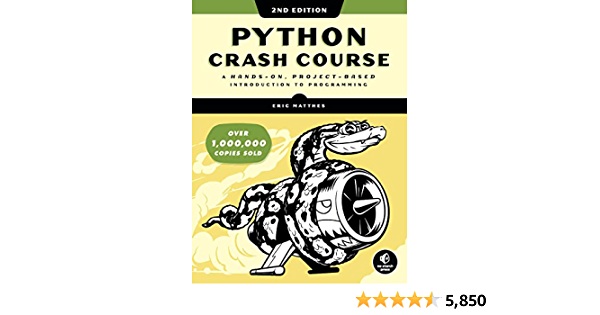
Download Python Crash Course: A Hands-On, Project-Based Introduction to Programming, 2nd Edition

 Python Crash Course, 2nd Edition: A Hands-On, Project-Based Introduction to Programming

Python Crash Course, 2nd Edition: A Hands-On, Project-Based Introduction to Programming


Link - https://fr.b-ok.africa/dl/5416472/bee132

#Python, #100DaysOfCode, #CodeNewbies, #WomenWhoCode, #DevOps, #code, #Coding, #LearnToCode, #DataAnalytics, #DataScience, #MachineLearning, #AI, #programming, 

Monday, 14 February 2022

The Golden Path to become A Full-Stack Data Scientist — Who is needed by in Real Industry.

All about Agile, Ansible, DevOps, Docker, EXIN, Git, ICT, Jenkins, Kubernetes, Puppet, Selenium, Python, etc

Why do you have to read this?

from glassdoor.com on 25th of March, 2019

The shortage of data scientists is becoming a serious constraint in some sectors. — Data Scientist: The Sexiest Job of the 21st Century from Havard Business Review

Nowadays Big Data is one of the most important key resources to get a competitive advantage in business, especially for IT companies. All of GAFA, accelerate their business by applying Data Science Technique. Let me explain a little bit more.

For instance, Google, Youtube uses Recommend Engine which will never let you go, because they suggest contents by completely following your taste. Amazon increases its Gross Merchandise Volume(GMS) by matching user and product very efficiently. Facebook shows Advertisements with higher CVR from extracting critical insights from your demographical and behavioral data. (I used their Ads in the previous job and was surprised at how effective it performed.)

Till now I’ve only mentioned about Internet Giants. However, according to Masayoshi Son who is Japanese CEO of SoftBank Vision Fund’s which is one of the biggest founds all over the world, and investments hover near $45 Billion dollars in 2018, left an insightful comment.

image from SoftBank’s unicorn hunter

The impact of Internet is somehow limited in particular domains or industries, like Advertisement, Retail (E-commerce), but AI is different. — Masoyoshi Son

“Next Big Waves” in other industries, which is applying data science methods into Unstructured Data like Image, Natural Language, Sounds, are coming up. I mean, for example, Mobility Industry you can see what Elon Mask does, Robotics you see what’s happening in Amazon’s warehouse, Finance, Healthcare area and so on.

If you are young and wanna be the biggest winner in your career, this Data Science or Machine Learning field could be the most possible choice.

Because from my marketing perspective, a quite simple demand-supply balance analysis, I think some special paid job title like professionals in the Finance field or classic Software Engineer, Business Development position with MBA grad is already taken by our elders. And those skills and knowledge are became commoditized. I mean these are very competitive.

Comparing to them, Data Science field is way messier and still in the mist. Then why not invest your career and passion, intelligence into this challenging field? Welcome to this fantastic ML technology with a full of hope!

In this article, I will focus on how to get a Data Scientist jobs or Machine Learning Engineer posts who will be needed by real industries, or in other words, who will pass the job hunting process with lesser pain. Let’s get started!

— — —

After you read this, you’ll get:

  • The Shortest Path towards A Real Data Scientist
  • The Best Learning Resource everyone trust in this area
  • The Realistic Possibility of your career with ML

— — —

Menu

  1. What is Data Science for Business?
  2. Data scientist vs Machine Learning Engineer
  3. Required Skill for A Full-Stuck Data Scientist
  4. A Golden DS Learning path for a newbie
  5. The Secret Bibles towards A Full-Stack Data Scientist

— — —

1. What is Data Science for Business?

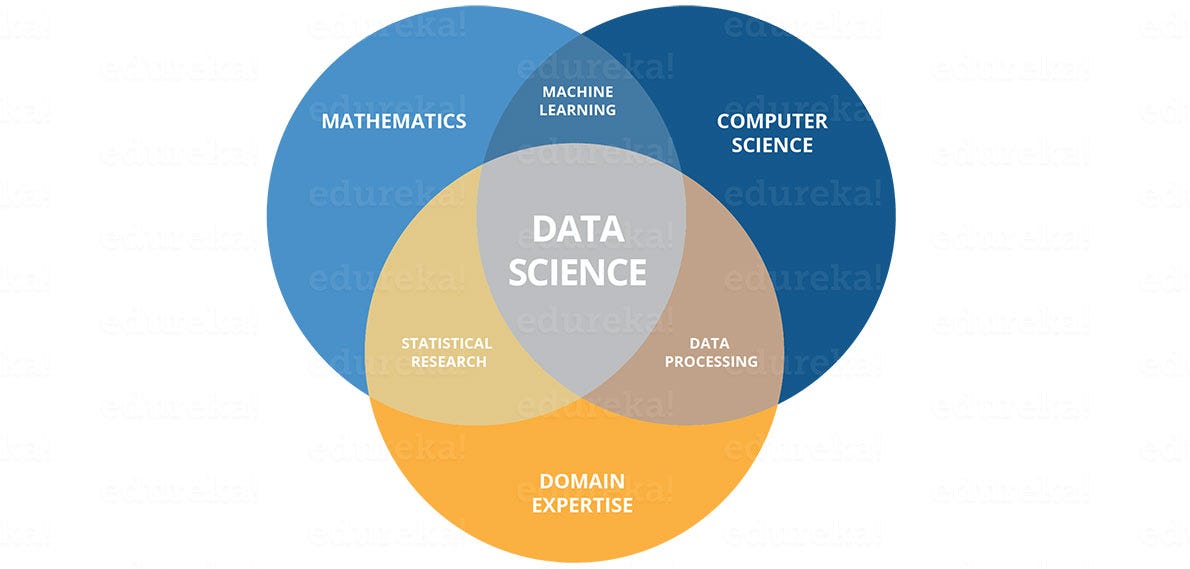
from edureka!

Data Science itself is just a Method, Not a Goal in our business. Then definition of it should be explained in much simpler way. — an unknown data scientists

Data Science itself can never be a purpose, if it becomes, it means you already fail. Rather than that, I would say “We just became able to make some additional or novel values in the real business which we couldn’t 10 years before”.

I highly recommend listening to this podcast, SDS 131: The One Purpose to Data Science and The Truth about Analytics from SuperDataScience.

To define Data Science, I wanted to start from their goal and purpose. The fundamental goals of Data Science in business is pretty clear. I think it can be simply described as followings:

  • To make more profit in your business by using data (as a result)
  • To understand and satisfy your customers by efficiency, better matching
  • To create a new business or startup by using machine learning

The background behind this Game Change

In addition, I think it’s very important to understand the reasons why the significance of Data Science is gradually recognized in recent business. It could be the following three:

  • An explosion the Amount of Data by Internet and Smartphone
  • Improvement of Computational power by GPU and TPU
  • Deep Learning enables to Process Unstructured Data

OK, so now we can take the next step to understand how Data Science jobs are separated in real industries. Let’s figure out where to start your career depends on what you have right now and what you should have to get an ideal position for 5–10 years long-span career plan.

— — —

2. Data Scientist vs Machine Learning Engineer

from www.stoodnt.com

In2018 summer, I decided to build a Machine Learning related career from general Data Analyst job because I was pretty sure this technological innovation will exactly reproduce what we’ve seen a drastic change which was caused by internet and smartphone.

Suppose you already heard about the average salary of data scientist (117,000USD/year!) or understood enough the potential of ML innovation. Here, I only focus on talking to people who want to switch their expertise domain into ML(data science) by taking several years.

After I built my Data Science portfolio and started my job hunting I realized there are mainly two different job title which can work closely with machine learning technology:

One is Data Scientist. Another is Machine Learning Engineer.

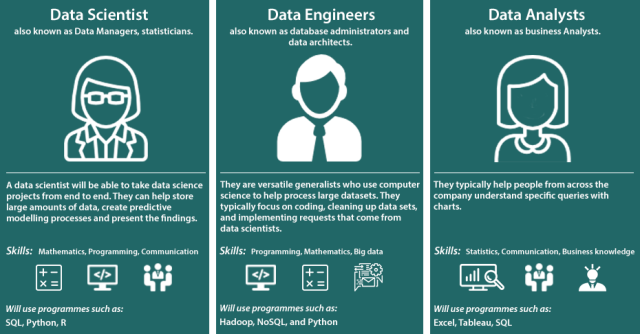
As you can see above image, the difference between these two and classic Data Analyst job and Data Engineer(Big Data Engineer) job is relatively easy to describe because they’ve been already existing for more than 10 years and required skills are very clear.

However, I found the required skills and knowledge of Data Scientists and Machine Learning Engineer is quite duplicated.

The reason is simple. Since Machine Learning is the most impactful innovation in recent Data Science field, which even able to create new business and companies like Chatbot startup or Drone startup, the specialist of Machine Learning itself became an undoubtedly respectable job title.

On the other hand, nowadays we also cannot talk about Data Science without taking Machine Learning into account, Data Scientist also must know ML Theory as well. Because most of the companies are currently interested in to accelerate their business by using ML technology.

In fact, Data Scientists might not only have theoretical knowledge of Machine Learning but also, at least, be able to implement several Machine Learning Algorithm like SVM or Random Forest for classification task by using scikit-learn or build Neural Network by using Keras.

Because ironically or interestingly, unless you understand math and statistics deeply, if we want to understand ML theory and Deep learning, it’s an efficient or required way to write codes and implement it by using Tensorflow and scikit-learn or those high-level API.

2–1. The different Area of Expertise between DS and ML engineer

Related skills in DS field from edureka!

I know this highest rated answer for this question from Quora is not enough for you, to clarify your career in this field.

Finally, I found the wall which is unable to climb over between these two jobs in real industries. It was like this:

Professional Machine Learning Engineer can build an “end-to-end software product” which has machine learning algorithm as a part of them.

Professional Data Scientists can define “the problem which should be solved(or not)” with scalability by using by machine learning and “How” as well.

I hope you get some pictures of what I wanna say. Please don’t forget that the final goal and responsible mission of ML engineer are, I think, finalizing to build a moving software. More clearly said, unless you don’t have experience of backend software engineering, it seems hard to get a comprehensive ML engineering position which we can often find on JDs.

I wanted to tell the newbies from a non-engineering background, like data analyst, the reality is that some serious tech companies write neural network from scratch, I mean they even don’t rely on Keras or Tensorflow.

On the other hand, Data Scientist requires outstanding business understanding which is more vague and difficult to prove though (life is hard). But this is so important because in some case, a classical statistics method like Multiple regression analysis can be applied, ML is even not required. And also the application of ML in software requires an enormous amount of time and human resources. It’s necessary to calculate cost-performance balance before a huge investment decision making.

2–2. So is it impossible to get ML engineering job?

image from www.newtium.com

Well, for the enthusiastic ML fresher, I found a suitable position for us in ML projects. That is Data Preprocessing and Feature Engineering role.

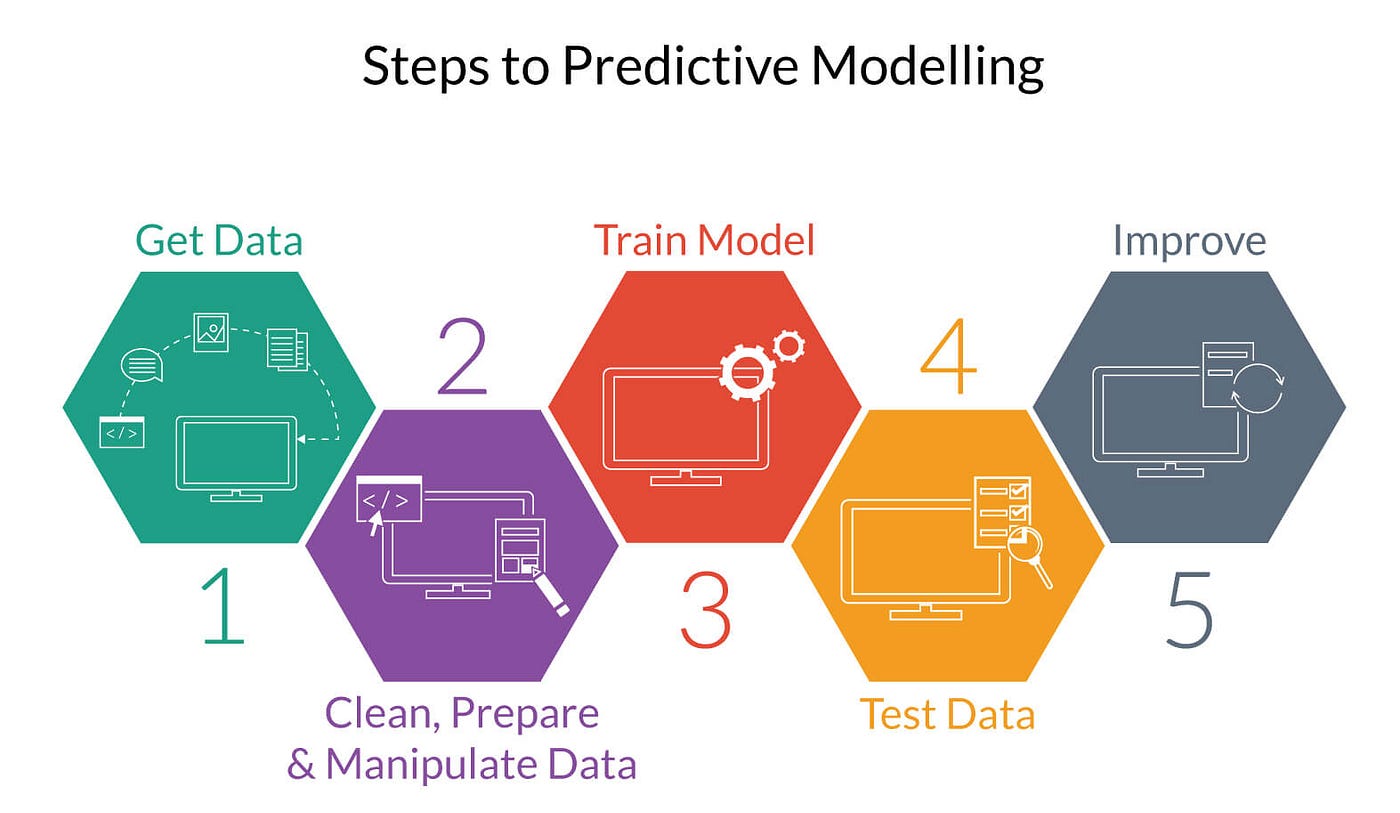
In the real machine learning application, we repeat the following main process again and again until we acquire significant enough accuracy:

  1. Data Preprocessing and Feature Engineering
  2. Modeling ML/DL architecture and Training
  3. Model Validation and Hyperparameter Tuning

Then finally ML engineers put this architecture into existing software or define whole architecture at the same time if you build a new product. In this process, it requires more development experiences and knowledge.

— — —

3. Required Skill for A Full-Stuck Data Scientist

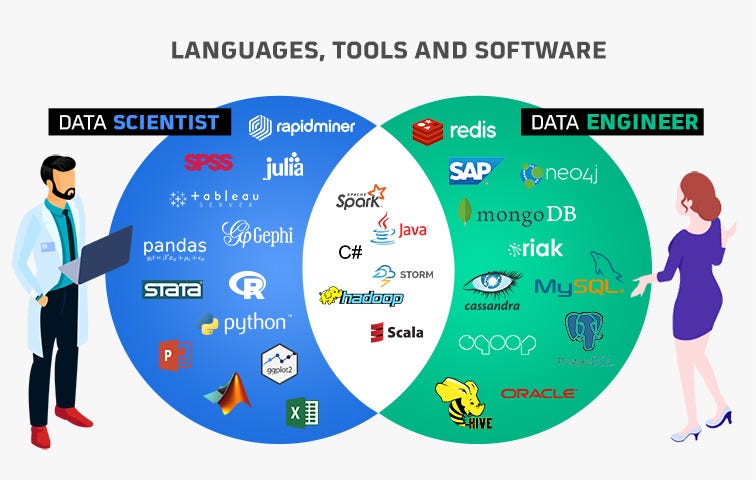
What is the difference between Data Scientist and Data Engineer?

Conclusion: In my definition, A Full-Stack Data Scientist is a perfect mix of Data Scientist and Machine Learning Engineer, who can design and build “End-to-End Machine Learning Project and Software”. — by me

After I analyzed over 200 job description of the Machine Learning related position in Japan and India, Singapore, including companies like Google, Facebook, IBM. I found must-have skill towards A Full-Stack Data Scientist Career.

I will divide them into two different categories, one is a visible and more practical skill(more important in terms of getting a job!), another is theoretical and relatively difficult to prove.

You can use the following checklist before you start making a learning plan. It’s very flexible as well depends on JDs which you want to apply.

3–1. Practical Skill (Easy to prove and visualize)

  • Basic Statistical Language: Python, R, Julia
  • Data Science Library: Numpy, Pandas, Scipy, Seaborn
  • ML/DL Library Experience: Tensorflow, Torch, scikit-learn
  • Unstructured Data Processing: Image, Text, Sounds
  • Relational Database: MySQL, PostgreSQL, SQLite
  • Distributed File System: Hadoop, Spark, AWS, MongoDB
  • Container-type virtual environment: Docker
  • Version control system: GitHub
  • Web Framework: Django, Flask, Ruby on Rails


Monday, 25 October 2021

Using Data To Make Better Decisions

All about Agile, Ansible, DevOps, Docker, EXIN, Git, ICT, Jenkins, Kubernetes, Puppet, Selenium, Python, etc


How many tennis balls could you fit in all of the skyscrapers in New York City? How many gummy bears could you fit in an airplane? How long would it take to fill the Mariana Trench with peanut butter? 

Like most people, you’d probably need some time and maybe a whiteboard to guess these answers. Not only are the questions difficult to imagine and rationalize, but also there’s a lot of relevant background information needed to be able to make an accurate guess.

Without collecting all relevant data, any answer is a guess.

Imagine watching any sports game where you could only see one team and no scoreboard. You would be able to guess how each team is doing from positioning and reactions, but it would be difficult to say confidently which team is winning or who is more likely to win the entire game. It would be even more difficult to win bets against someone else watching normally on TV being spoon-fed a plethora of statistics and hearing the opinions of professional commentators. 

Despite the unfairness of this competition, this is how many people invest in stocks. Dark Pools can consist of more than half of the overall trade volume for a stock, and yet despite this huge imbalance, many people don’t know they exist let alone monitor their activities. Gaining access and utilizing all the information available before making critical decisions can level the playing field and facilitate educated decisions.
Data can help us make sense of big numbers and simplify complex ideas. Pluto is roughly 3 billion miles away, so how long would it take to walk there? About a billion hours, which is longer than watching all the content on all major streaming sites back to back 20,000 times. While the number and the analogy mean the same thing, one is substantially easier to understand intuitively than the other. 

Data explanation and visualization is a crucial component of understanding complex data points.


Financial data is infamously one of the largest data sets in the world and endlessly complicated, so seeing it in easy-to-process graphs instead of raw metrics helps elucidate. It’s difficult to visualize two numbers of orders of magnitude apart, but it’s easy to see how big one circle is against another.
Likewise, it’s almost impossible to rationalize numbers without context for what they mean. Financial data is rife with jargon and acronyms that require a dictionary to read, let alone understand. Being able to process this information is knowing not just what the words mean, but also how it affects a company and how it compares to other similar companies. 

One of the best ways to use data is not as a standalone item in a complex sheet but as a living, breathing, dynamic guide for making better decisions. Data in isolation is hard to understand intuitively and even worse to try to act upon. Combined with visualizations, it can form a complete picture for faster understanding and superior intuitive answers.

Not all data is created equal.


This paradigm is far from original, with many of the most prominent data sources using citations and best practices to try to eliminate the uncertainty. One of the largest crypto data providers revealed that 65%-95% of all their data was inaccurate and untrustworthy. In the wake of the LIBOR scandal, cracks in the financial system were exposed and the underbelly of market manipulation was revealed. Recently, payment for order flow was popularized, selling people’s trades to big institutions and allowing them to take profit away from investors. Far from novel, these are just several examples of data being difficult to trust. 

The commonality from all three of these is a fundamental agency problem; each of these groups stood to gain financially from manipulating their data or failing to correct incorrect data. The solution is to find data sources that are fundamentally incentivized to provide accurate data. Most brokers provide access to financial data, but often there is a conflict of interest, such as a broker selling their own stock, or fees on trading either explicit or invisible through slippage. 

For this reason, it’s essential to carefully evaluate the trustworthiness of data sources and not take information at face value, especially when critical decisions are being made from it. Healthy skepticism and asking if there is a conflict of interest can expose early on whether a data set is purely analytical or might be inaccurate and skewed.

Data is one of the most valuable resources in the world.


Almost half of the top seven biggest companies in the world use data as their primary product for good reason. Making informed, objective decisions can eliminate uncertainty on correct choices and often guarantee the best possible outcomes. Learning to make these decisions off of comprehensive, well understood and trustworthy data can drastically increase the effectiveness of any decision and bring order to an otherwise chaotic world.

Wednesday, 20 October 2021

ADVANTAGES OF HIGH-QUALITY PERIMETER SECURITY SYSTEMS

All about Agile, Ansible, DevOps, Docker, EXIN, Git, ICT, Jenkins, Kubernetes, Puppet, Selenium, Python, etc

When browsing the market for security systems which work to protect the entire perimeter or your business premises – look no further than perimeter security systems.

With a range of types to choose from, including security bollards, high security gates, vehicle barriers, you can be sure your premises will be protected from unauthorised visitors and thieves. This will ensure your business is safe from theft and intrusion or damage from trespassers. These perimeter security systems are often favoured by large companies with many access points to their sites. Hörmann, one of Europe’s leading manufacturers of door solutions also offering perimeter security systems, have identified the advantages of perimeter security systems. Highlighting why you should invest in high-quality solutions to protect your site. 

A Wide Choice of Security Solutions to Choose From 

Security_Solutions.jpeg

When searching for your perfect perimeter security system, you will notice just how much choice you have! Which is great, considering no two premises are the same. 

Below are just some solutions you can choose from: 

  • High security barriers 
  • Security bollards 
  • CCTV solutions 
  • Mobile vehicle barriers 
  • Automated sliding gates

Have Control Over Who Enters Your Premises 

The main advantage of installing perimeter security systems is the ability it provides you to control who enters your premises. Giving you the choice to permit access to only those who have been authorised and preventing unknown visitors from gaining access without approval. It is beneficial to cover the entire perimeter of your premises to ensure every area is covered. You could do this using a variety of types of perimeter security, determining your main entrance and smaller side entrances. In most cases, companies will choose to prioritise their main entrances with the highest levels of security. Followed by smaller systems in place for side entrances where footfall and traffic levels are low. 

Protect your Premises, Property and Staff 

This may seem obvious, but many people underestimate the potential for theft on their premises. Particularly if they believe their location to be safe. Despite where you are located as a company and if you have or have not been targeted by thieves before, perimeter security systems are paramount in providing protection for your premises, property, and staff. Investing in these systems in the best way to prevent theft, which could be both costly and detrimental to your company’s operations. 

These measures will also ensure your staff and visitors feel safe on site, providing peace of mind. This is particularly important if you have staff on site overnight when your premises are much more likely to be targeted. 

Perimeter Security Systems Can Be Budget Friendly 

When considering security systems most people will assume this is going to take a large chunk out their budget. Think again! Perimeter security systems can be customised to meet both your needs and your budget. Working with manufacturers you can determine the features which are most important to you and keep within your budget. If you need a low-cost solution to perimeter security systems, many will opt for a simple barrier or manual sliding gates. 

Control the Flow of Moving Traffic 

Security_Parameters.jpeg

If you manage a busy site with large amounts of both traffic and footfall, security systems like bollards and barriers are great for controlling this flow of moving traffic. This can become useful in other areas, like public spaces for events, where large gatherings are predicted to take place. Installing bollards or turnstiles can help to prevent dangerous rushes amongst crowds. Working to move people quickly but orderly through access points. 

#BigData #Analytics #frontend #MachineLearning #CyberSecurity #Python #RStats #TensorFlow #JavaScript #CloudComputing #Serverless #Linux #database #DataScience #100DaysofCode #ML #data #streaming #devops #php #css #java #AI #digital #opensource

Rank

seo