Welcome to our Coding with python Page!!! hier you find various code with PHP, Python, AI, Cyber, etc ... Electricity, Energy, Nuclear Power

Showing posts with label #MachineLearning. Show all posts

Tuesday, 2 May 2023

Tutorial Step by step machine learning based land use classification using Python

Basic steps to perform machine learning based land use classification using Python:

  1. Data preparation: Gather data on land use from various sources such as satellite imagery, ground survey, or government data. Process the data to make sure it is in a format that can be easily used by machine learning algorithms.

  2. Feature extraction: Extract features from the data such as vegetation index, texture, or color information. This can be done using various Python libraries such as scikit-image or OpenCV.

  3. Data labeling: Label the data with the correct land use category. This can be done using various techniques such as supervised learning, semi-supervised learning, or unsupervised learning.

  4. Model training: Train the machine learning model using the labeled data. You can use various algorithms such as Decision Trees, Random Forest, or Support Vector Machines (SVM) to train your model.

  5. Model evaluation: Evaluate the performance of your model using metrics such as accuracy, precision, recall, and F1 score.

  6. Model deployment: Once you are satisfied with the performance of your model, you can deploy it for land use classification.

Here are some tutorials and resources that can help you with machine learning based land use classification using Python:

  1. Land Use Classification with Machine Learning - This tutorial provides a step-by-step guide to performing land use classification using machine learning in Python. It covers data preparation, feature extraction, model training, and evaluation. The tutorial also includes code examples and print screens to help you follow along.

  2. Machine Learning for Land Use and Land Cover Classification - This resource provides an overview of machine learning techniques for land use and land cover classification. It covers various algorithms and techniques such as SVM, Decision Trees, Random Forest, and Deep Learning. The resource also includes code examples and print screens to help you understand the concepts.

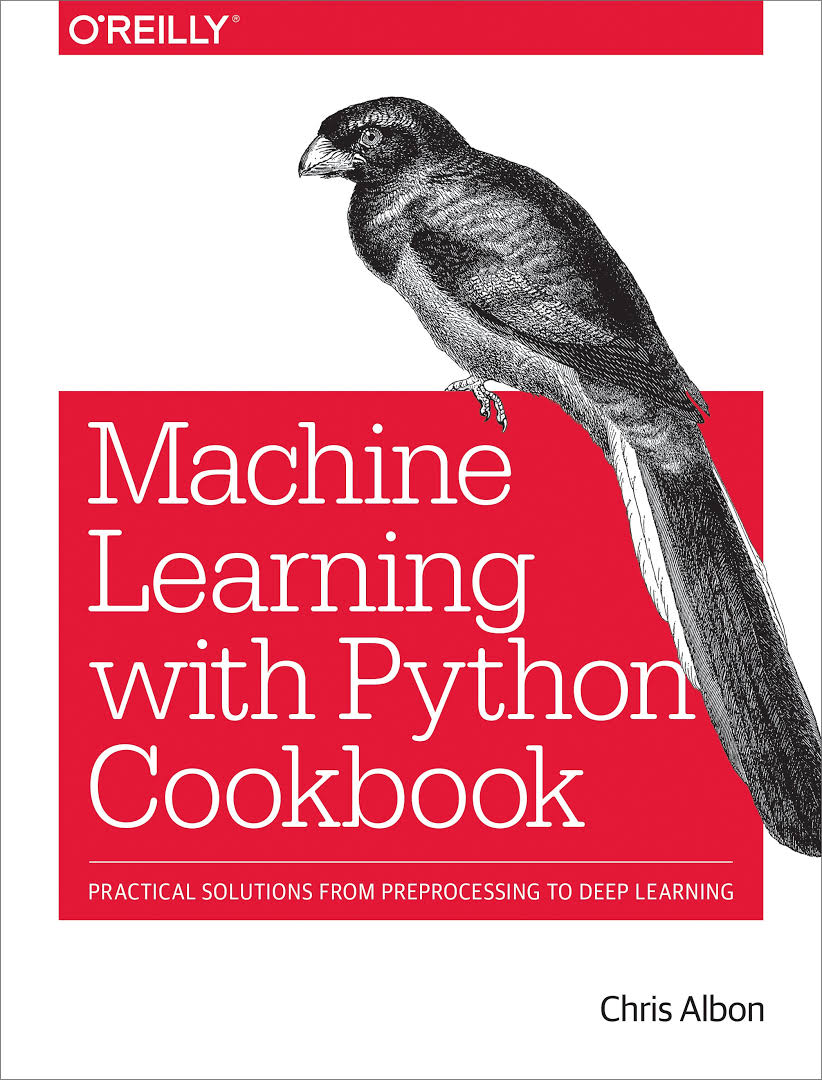
  3. Machine Learning with Python - This book provides an introduction to machine learning using Python. It covers various topics such as data preprocessing, feature extraction, model training, and evaluation. The book also includes code examples and print screens to help you understand the concepts.

I hope this helps you get started with machine learning based land use classification using Python. Good luck!


Here is a step-by-step guide on Machine Learning based Land Use Classification with Python using scikit-learn and TensorFlow libraries.

Step 1: Data Acquisition The first step in any machine learning project is acquiring the data. For land use classification, you can obtain satellite imagery data from public sources such as the US Geological Survey (USGS) or the European Space Agency (ESA). For this tutorial, we will use the Sentinel-2 satellite imagery data provided by ESA.

Step 2: Data Preprocessing Once you have obtained the satellite imagery data, you will need to preprocess it before using it for classification. The preprocessing steps include:

  1. Loading the data into a format that can be read by Python.
  2. Removing any clouds or atmospheric noise from the images.
  3. Resampling the data to a common resolution.
  4. Splitting the data into training and testing sets.

Here's an example of how to load and preprocess the data:

python
import rasterio import numpy as np from sklearn.model_selection import train_test_split from sklearn.preprocessing import StandardScaler # Load the image and mask data with rasterio.open('image.tif') as src: image_data = src.read() with rasterio.open('mask.tif') as src: mask_data = src.read() # Remove clouds and atmospheric noise # ... # Resample the data # ... # Flatten the data into a 2D array image_data = np.transpose(image_data, (1, 2, 0)) mask_data = np.transpose(mask_data, (1, 2, 0)) rows, cols, bands = image_data.shape image_data = np.reshape(image_data, (rows * cols, bands)) mask_data = np.reshape(mask_data, (rows * cols,)) # Split the data into training and testing sets X_train, X_test, y_train, y_test = train_test_split(image_data, mask_data, test_size=0.2, random_state=42) # Standardize the data scaler = StandardScaler() X_train = scaler.fit_transform(X_train) X_test = scaler.transform(X_test)

Step 3: Feature Extraction In machine learning, the process of converting raw input data into a set of meaningful features is known as feature extraction. Feature extraction can be performed manually, or by using automated techniques such as principal component analysis (PCA) or independent component analysis (ICA).

Here's an example of how to perform feature extraction using PCA:

python
from sklearn.decomposition import PCA # Perform PCA on the training data pca = PCA(n_components=10) X_train_pca = pca.fit_transform(X_train) # Apply the same transformation to the test data X_test_pca = pca.transform(X_test)

Step 4: Training the Model Once the data has been preprocessed and feature extraction has been performed, the next step is to train the machine learning model. For land use classification, we will use the scikit-learn library to train a Random Forest Classifier.

python
from sklearn.ensemble import RandomForestClassifier # Train the random forest classifier clf = RandomForestClassifier(n_estimators=100, random_state=42) clf.fit(X_train_pca, y_train)

Step 5: Evaluating the Model Once the model has been trained, the next step is to evaluate its performance on the testing set. We will use the confusion matrix and classification report to evaluate the model's performance.

python
from sklearn.metrics import confusion_matrix, classification_report # Evaluate the model on the testing set y_pred = clf.predict(X_test_pca) print(confusion_matrix(y_test, y_pred)) print(classification_report(y_test, y

Free Machine Learning with Python cookbooks (PDF)

There are several great Machine Learning with Python cookbooks available, each with its own strengths and focuses. Here are a few popular ones:

Python Machine Learning Cookbook


This cookbook covers a wide range of topics in machine learning, from data cleaning and preparation to model selection and evaluation. It includes practical examples and code snippets to help readers apply the concepts covered in the book.

  • "Applied Machine Learning" by Kelleher and Tierney: 

This book takes a practical approach to machine learning, covering topics such as data preparation, feature engineering, and model selection. It includes code examples in Python and R and provides guidance on how to apply machine learning techniques to real-world problems.


This popular book covers a broad range of topics in machine learning, including classification, regression, clustering, and deep learning. It includes practical examples and code snippets using popular Python libraries such as scikit-learn, Keras, and TensorFlow.


This book covers a wide range of topics in machine learning, including data preprocessing, classification, regression, clustering, and deep learning. It includes code examples in Python and provides guidance on how to implement machine learning algorithms from scratch.

Ultimately, the best Machine Learning with Python cookbook for you will depend on your background, interests, and learning goals. I recommend reviewing the table of contents and sample chapters of each book to determine which one best aligns with your needs.

Tuesday, 15 February 2022

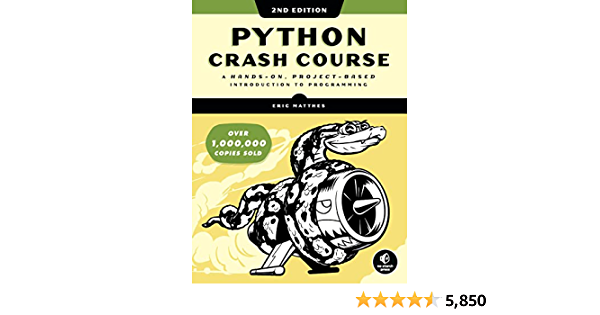
Download Python Crash Course: A Hands-On, Project-Based Introduction to Programming, 2nd Edition

 Python Crash Course, 2nd Edition: A Hands-On, Project-Based Introduction to Programming

Python Crash Course, 2nd Edition: A Hands-On, Project-Based Introduction to Programming


Link - https://fr.b-ok.africa/dl/5416472/bee132

#Python, #100DaysOfCode, #CodeNewbies, #WomenWhoCode, #DevOps, #code, #Coding, #LearnToCode, #DataAnalytics, #DataScience, #MachineLearning, #AI, #programming, 

Wednesday, 20 October 2021

ADVANTAGES OF HIGH-QUALITY PERIMETER SECURITY SYSTEMS

All about Agile, Ansible, DevOps, Docker, EXIN, Git, ICT, Jenkins, Kubernetes, Puppet, Selenium, Python, etc

When browsing the market for security systems which work to protect the entire perimeter or your business premises – look no further than perimeter security systems.

With a range of types to choose from, including security bollards, high security gates, vehicle barriers, you can be sure your premises will be protected from unauthorised visitors and thieves. This will ensure your business is safe from theft and intrusion or damage from trespassers. These perimeter security systems are often favoured by large companies with many access points to their sites. Hörmann, one of Europe’s leading manufacturers of door solutions also offering perimeter security systems, have identified the advantages of perimeter security systems. Highlighting why you should invest in high-quality solutions to protect your site. 

A Wide Choice of Security Solutions to Choose From 

Security_Solutions.jpeg

When searching for your perfect perimeter security system, you will notice just how much choice you have! Which is great, considering no two premises are the same. 

Below are just some solutions you can choose from: 

  • High security barriers 
  • Security bollards 
  • CCTV solutions 
  • Mobile vehicle barriers 
  • Automated sliding gates

Have Control Over Who Enters Your Premises 

The main advantage of installing perimeter security systems is the ability it provides you to control who enters your premises. Giving you the choice to permit access to only those who have been authorised and preventing unknown visitors from gaining access without approval. It is beneficial to cover the entire perimeter of your premises to ensure every area is covered. You could do this using a variety of types of perimeter security, determining your main entrance and smaller side entrances. In most cases, companies will choose to prioritise their main entrances with the highest levels of security. Followed by smaller systems in place for side entrances where footfall and traffic levels are low. 

Protect your Premises, Property and Staff 

This may seem obvious, but many people underestimate the potential for theft on their premises. Particularly if they believe their location to be safe. Despite where you are located as a company and if you have or have not been targeted by thieves before, perimeter security systems are paramount in providing protection for your premises, property, and staff. Investing in these systems in the best way to prevent theft, which could be both costly and detrimental to your company’s operations. 

These measures will also ensure your staff and visitors feel safe on site, providing peace of mind. This is particularly important if you have staff on site overnight when your premises are much more likely to be targeted. 

Perimeter Security Systems Can Be Budget Friendly 

When considering security systems most people will assume this is going to take a large chunk out their budget. Think again! Perimeter security systems can be customised to meet both your needs and your budget. Working with manufacturers you can determine the features which are most important to you and keep within your budget. If you need a low-cost solution to perimeter security systems, many will opt for a simple barrier or manual sliding gates. 

Control the Flow of Moving Traffic 

Security_Parameters.jpeg

If you manage a busy site with large amounts of both traffic and footfall, security systems like bollards and barriers are great for controlling this flow of moving traffic. This can become useful in other areas, like public spaces for events, where large gatherings are predicted to take place. Installing bollards or turnstiles can help to prevent dangerous rushes amongst crowds. Working to move people quickly but orderly through access points. 

#BigData #Analytics #frontend #MachineLearning #CyberSecurity #Python #RStats #TensorFlow #JavaScript #CloudComputing #Serverless #Linux #database #DataScience #100DaysofCode #ML #data #streaming #devops #php #css #java #AI #digital #opensource

Rank

seo