-->

Welcome to our Coding with python Page!!! hier you find various code with PHP, Python, AI, Cyber, etc ... Electricity, Energy, Nuclear Power

Showing posts with label job. Show all posts

Sunday, 3 October 2021

45 Artificial Intelligence Companies to Watch in 2021

From Google and Amazon to Apple and Microsoft, every major tech company is dedicating resources to breakthroughs in artificial intelligence. Personal assistants like Siri and Alexa have made AI a part of our daily lives. Meanwhile, revolutionary breakthroughs like self-driving cars may not be the norm, but are certainly within reach. 

ai companies, artificial intelligence companies, ai company, top ai companies,  best ai companies,

TOP AI COMPANIES TO KNOW

  • CCC
  • Veritone
  • LogicMonitor
  • nate
  • People.ai
  • Ascent
  • Osaro
  • Riskified
  • Nvidia
  • Nuro
  • Tempus
  • Ascent
  • DataRobot
  • Freenome
  • Grammarly
  • CloudMinds
  • H20.ai
  • Nauto
  • OpenAI
  • Sift Science
  • SoundHound
  • Vicarious
  • Zoox
  • Zymergen

As the big guys scramble to infuse their products with artificial intelligence, other companies are hard at work developing their own intelligent technology and services.

The AI industry even broke records during the global uncertainty of the COVID-19 pandemic, with artificial intelligence startups raising $33 billion in 2020, according to CB Insights. 

With investors clamoring and the technology cross-pollinating across countless industries, we've rounded up 45 artificial intelligence companies and AI startups worth keeping an eye on.

Industry: Machine Learning, Analytics 

Location: NYC

What it does: Urbint brings the power of AI and cloud-based technology to various infrastructure projects, allowing companies to anticipate potential dangers and issues that could arise down the road. By mapping out vulnerable and high-risk areas, Urbint keeps workers and communities safer. Organizations can now move forward with confidence knowing all possibilities are accounted for. 
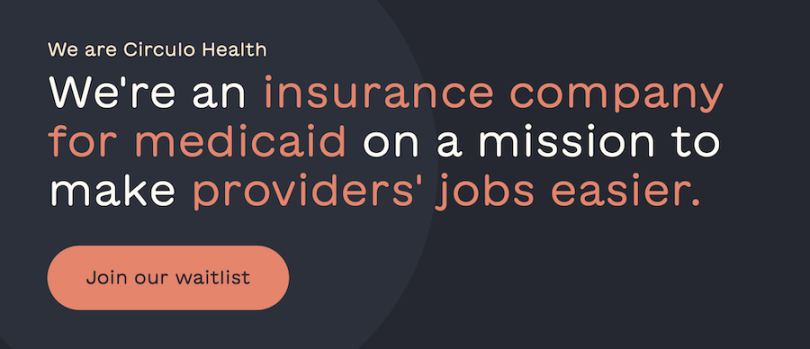

Circulo Health Artificial Intelligence Remote
Circulo Health

Industry: Healthcare

Location: Columbus, OH

What it does: Simplifying the healthcare system for Medicaid patients has become more imperative than ever, but delivering personalized care is still in the back of providers’ minds. That’s why Circulo Health is teaming up with Olive.ai to provide more high-tech and humane healthcare experiences. Doctors can offer various ways for patients to communicate with them, making regular updates, health tracking, and virtual visits much more convenient for all parties involved.
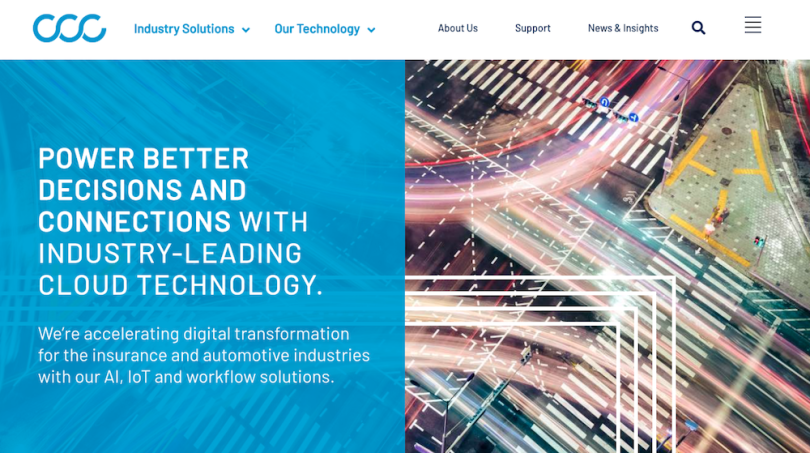
 

CCC ai companies roundup
CCC

Industry: Automotive + Insurance

Location: Chicago, IL

What it does: CCC accelerates transformation across the automotive and insurance industries by utilizing cloud technology to create innovative AI, IoT and workflow solutions. From utilizing AI and IoT to power better decision making at scale through collecting car data, claims, photos, videos and more from hundreds of actionable data points per day, CCC’s technology makes it possible for companies to accelerate innovation and deliver better customer experiences every day.

 

Veritone ai companies roundup
Veritone

Industry: Big Data

Location: Costa Mesa, CA

What it does: Veritone’s goal is to make the world more vibrant and transparent by allowing organizations to discover more clarity and bring deeper insights into their decision making process. The company has created a proprietary Operating System designed for artificial intelligence, Veritone aWARE, making sifting through massive quantities of data both scalable and actionable — perfect for industries as wide-ranging as energy and entertainment.
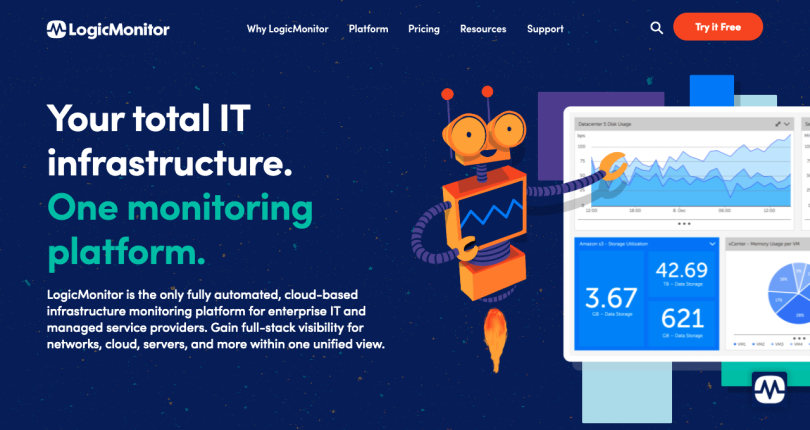
 

LogicMonitor ai companies roundup
LogicMonitor

Industry: Software

Location: New York, NY

What it does: LogicMonitor operates a fully automated, cloud-based infrastructure monitoring platform that provides enterprise IT and managed service providers with full-stack visibility into networks, clouds, servers and more within a single, unified dashboard. The monitoring platform is designed to add next-to-no lift to existing IT infrastructure and is designed with rigorous third-party security protocols to support seamless scalability, making LogicMonitor an excellent choice for enterprises of various sizes.

 

nate ai companies roundup
nate

Industry: E-commerce

Location: New York, NY

What it does: Nate operates an AI-powered app that incorporates the best products from websites across the internet and makes them available for purchase all in one convenient location. The nate app allows users to consolidate their favorite items into lists on their nate dashboard and simply click a button to purchase while the AI handles all checkout and shipping steps on its own. Users can even split payments on items purchased through nate into four installments for easier payments on the things they want most.
 

People.ai ai companies roundup
People.ai

Industry: Software

Location: San Francisco, CA

What it does: People.ai provides enterprises with a revenue operations and intelligence platform that transforms business activity data into crucial insights for sales, marketing and operations teams. Powered by cutting-edge AI-based automation and user-friendly workflows, People.ai’s platform helps facilitate decision-making across the enterprise without weighing teams down with extraneous processes.


Riskified-ai-companies-roundup
Riskified

Riskified

Industry: E-commerce

Location: New York, NY

What they do: Riskified is an AI powered platform that allows e-commerce sites to better identify legitimate shoppers and reduces the friction in the purchasing process to create a better customer experience. The company’s scalable solution adapts to meet evolving needs as e-commerce shops release new products and enter new markets, with Riskified’s machine learning models pulling from more than one billion past transactions to make instant decisions that stop e-commerce fraud attacks before they occur.
 

Moveworks ai companies roundup
Moveworks

Moveworks

Industry: Information Technology 

Location: Mountain View, CA

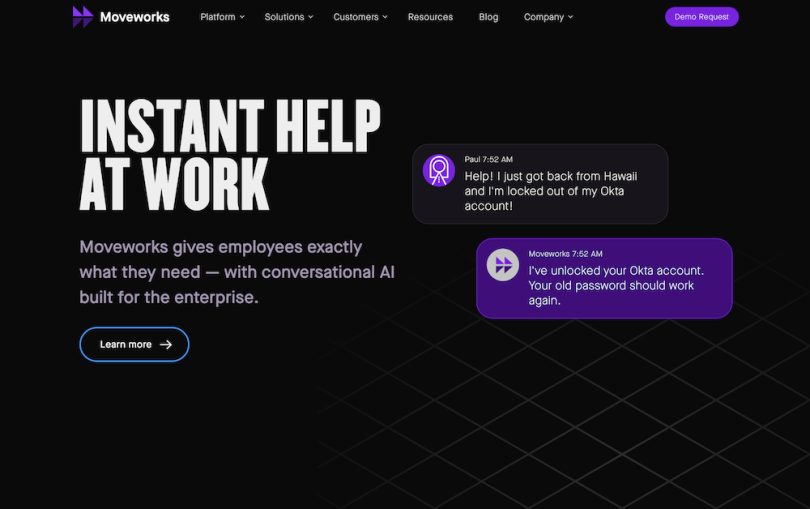
What it does: Moveworks offers a customer service interface that utilizes artificial intelligence and deep learning systems to help resolve customer IT support issues. Built on a framework of NLU and collective learning capabilities, Moveworks’ cloud-based platform allows organizations from startups to Fortune 500 companies to better serve employee needs in real time and reduce the strain of modern IT professionals

 

grammarly artificial intelligence companies
Grammarly

Grammarly

Industry: Productivity, Writing

Location: San Francisco, CA

What it does: Grammarly is an AI-enabled writing assistant that helps writers and communicators all over the world with spelling, grammar and conciseness. The browser plugin checks over content being written in real-time and alerts for everything from spelling mistakes to tone errors and even scans content for plagiarism. Grammarly works across multiple platforms, including Gmail, Slack, Jira, Medium and many more.
 

alpha sense artificial intelligence companies
AlphaSense

AlphaSense

Industry: Fintech

Location: New York, NY

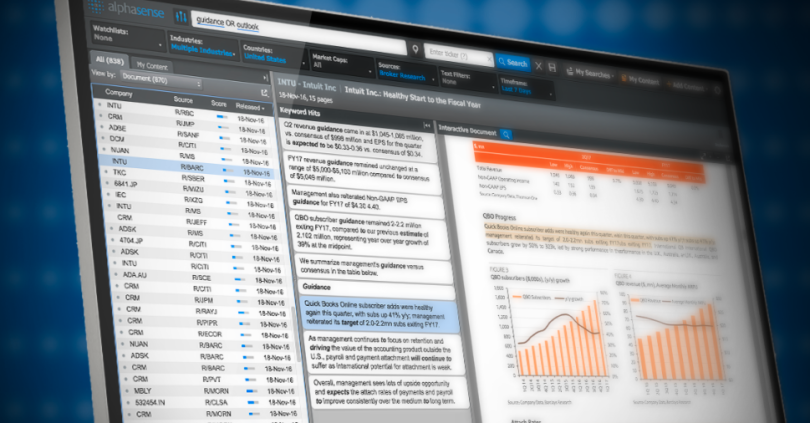
What it does: AlphaSense is an AI-powered search engine designed to help investment firms, banks and Fortune 500 companies find important information within transcripts, filings, news and research. The technology uses artificial intelligence to expand keyword searches for relevant content.

 

artificial intelligence company tempus
Tempus

Tempus

Industry: Healthtech, Biotech, Big Data

Location: Chicago, IL

What it does: Tempus uses AI to gather and analyze massive pools of medical and clinical data at scale. The company, with the assistance of AI, provides precision medicine that personalizes and optimizes treatments to each individual’s specific health needs; relying on everything from genetic makeup to past medical history to diagnose and treat. Tempus is currently focusing on using AI to create breakthroughs in cancer research.

Monday, 6 August 2018

THE STEP-BY-STEP GUIDE: GDPR COMPLIANCE FOR WEB SCRAPERS

Unless you’ve been living under a rock for the past few months you know that the EU’s General Data Protection Regulation (GDPR) is upon us.
It is the most comprehensive data protection law ever been introduced, fundamentally changing the way companies can use the personal data of their customers and prospects.
There are countless articles and guides about how GDPR will affect your company’s marketing efforts, lead generation, etc. and the changes you’ll need to make to ensure your company is in full compliance with the law.
But when it comes to web scraping....nothing.
Which is strange given that web scraping has traditionally been the backbone of many companies marketing, lead generation and market intelligence efforts.
To shed some light on this grey area, I sat down with Sanaea Daruwalla, Head of Legal at Scrapinghub, to get her insights on how Scrapinghub ensures our clients are scraping personal data in a GDPR compliant way.
In this guide I will share with you:
  • How GDPR is going to impact web scraping (Answer: unless you have the person's explicit consent it is now illegal to scrape a EU residents personal data under GDPR).
  • The exact decision making process Sanaea uses when evaluating the GDPR compliance of a web scraping project, and
  • Answer the most pressing questions web scrapers have about GDPR compliance.
Before we get started though, I want to highlight a quick disclaimer.
Disclaimer: I am not a lawyer, and the recommendations in this guide do not constitute legal advice. Our Head of Legal is a lawyer, but she’s not your lawyer, so none of her opinions or recommendations in this guide constitute legal advice from her to you. The commentary and recommendations outlined below are based on Scrapinghub’s experience helping our clients (startups to Fortune 100’s) maintain GDPR compliance whilst scraping 7 billion web pages per month. If you want assistance with your specific situation then you should consult a lawyer.
Now with the technicalities out of the way, let’s talk about how you should evaluate your web scraping project for GDPR compliance.

Step 1: Are You Scraping Personal Data?

This is the very first and most obvious question you should be asking yourself when you are instigating a web scraping project.
The General Data Protection Regulation, or GDPR as it is more commonly known, only applies to personal data. Which is defined as any personally identifiable information (PII) that could be used to directly or indirectly identify a specific individual. Examples of personal data include a person's:
  • Name
  • Physical Address
  • Email Address
  • Phone Number
  • Credit Card Details
  • Bank Details
  • IP Address
  • Date of Birth
  • Employment Info
  • Social Security Number
  • Medical Information
  • Video/Audio Recording
If you aren’t scraping personal data, then GDPR does not apply. However, if you are scraping personal data then move to step 2.
gdpr-compliance-web-scraping-eu-residents

Step 2: Are Your Scraping the Personal Data Of EU Residents?

If you are scraping personal data then the next question you need to ask yourself is whether or not you are scraping the personal data of EU citizens or residents (note that the GDPR actually covers the EEA, which includes all EU countries, plus Iceland, Liechtenstein, and Norway, so it’s a bit broader than just the EU).
GDPR is an EEA specific regulation, so it only applies to EU citizens. If you are scraping the personal information of residents of other countries (ex. US, Canada, Australia, etc.) then GDPR may not apply. You just need to comply with the data protection laws in the jurisdiction that you scraping personal data from.
gdpr-compliance-web-scraping-consent

Step 3: Do You Have A Lawful Reason to Scrape Their Personal Data?

Ok, now we are starting to get into the nuts and bolts of GDPR. We now know we are scraping personal data and there will be EU citizens affected. The next question we need to ask yourselves is:
Do we have a lawful reason to scrape the personal data of these EU citizens?
Under GDPR to use or hold the personal data of any EU citizen a company must comply with one or more of the following legal reasons for storing or using their personal data, otherwise they will be in breach of the regulation. The five types of lawful reasons are:
  • Consent - the data subject (person whose data we have) consented to us having their data.
  • Contract - the personal data is required for performance of a contract with the data subject.
  • Compliance - necessary for compliance with a legal obligation.
  • Vital Interest, Public Interest, or Official Authority - typically only applicable for state run bodies where access to personal data is in the public's interest.
  • Legitimate Interest - necessary for our legitimate interests.
When a client comes to Scrapinghub looking to scrape the personal data of EU residents we take it on a case by case basis because it is vital that you can prove that you have a lawful reason to scrape that data.
The most common legal reasons in the case of web scraping are legitimate interest and consent.
First, let’s take a look at consent...

Consent

For most web scrapers, demonstrating that you have consent from the individual to scrape their personal data will be the main (and often only) method in which you can lawfully scrape the personal data from EU residents.
Prior to the commencement of GDPR, there was a lot of discussion within the web scraping community on whether an EU resident had to implicitly give their consent for companies to scrape their personal data if it was available on public websites (no login required to see the data).
The argument was that by uploading personal data to a public site you are giving consent for that data to be viewed and stored by 3rd parties.
However, after in-depth review of this argument by Sanaea (Head of Legal at Scrapinghub) and external legal experts contracted by Scrapinghub we concluded that this interpretation of the regulations wasn’t compliant with GDPR.
As a result, to scrape the personal data of EU residents you now need to demonstrate that you have the explicit consent of the individual before scraping their personal data.
A lot of web scrapers mightn’t like this position, but after a careful review of all the guidance documents provided by the commission Scrapinghub believes that adopting this policy is the only one that is guaranteed to prevent you and your company falling foul to GDPR.
Obviously, this interpretation of the GDPR regulations will significantly curtail most web scraping projects focused on extraction of the personal information of EU residents for lead generation, market analysis, etc.
However, it will still enable some companies to scrape the personal data of EU citizens if they have obtained their explicit content to do so. An example of this would be companies like Mint.com, where users give Mint consent to log into their online banking accounts and retrieve their banking transactions so that they can be tracked and displayed in a more user friendly format on Mint.com.
Next, we’ll look at using “legitimate interest” as the your lawful reason for scraping the personal data of EU citizens.

Legitimate Interest

The other likely lawful reason available to web scrapers is if they can demonstrate they have a legitimate interest in scraping/storing/using this personal data.
Although this lawful reason is viable for web scrapers, for most companies it will be very difficult for them to demonstrate that they have a legitimate interest in scraping someone's personal data.
In most cases, only governments, law enforcement agencies, etc. will have what would be deemed a to have a legitimate interest in scraping the personal data of its citizens as they will typically be scraping people's personal data for the public good.
gdpr-compliance-web-scraping-personal data

Step 4: Assess The Personal Data Being Scraped

As mentioned in Step 3, when a client approaches Scrapinghub looking to scrape the publicly available personal data of EU residents we take it on a case by case basis and work with the client to ensure that this data is being extracted in a GDPR compliant manner.
During this stage not only do we look at the companies lawful reason for scraping personal data we also look at the type of personal data they want to extract, the extent of the proposed data collection and how they plan to use the data post extraction.
There are a number of reasons for taking this approach:

Reason #1: Prevent the Scraping of Sensitive Data

Under the GDPR regulation, there are certain types of data that are classed as “sensitive” . These include any type of personal data that could indicate a person's:
  • Racial or ethnic origin
  • Political opinions
  • Religious or philosophical beliefs
  • Trade union membership
  • Genetic data
  • Biometric data for the purpose of uniquely identifying a natural person
  • Data concerning health or a natural person’s sex life and/or sexual orientation
Scraping sensitive data means that you are subject to additional rules and require specific consent to be given for this data to be scraped and stored. Therefore, unless you have clear explicit consent and legitimate reason to scrape this data you should avoid scraping it.

Reason #2: Minimise the Extent of The Data Extraction

A important part of GDPR is that companies should only store and process as much data as is required to successfully accomplish a given task.
Given web scrapings ability to extract large quantities of data from a website there is sometimes the desire to capture as much data as possible as it might be useful in the future. Obviously, this mindset isn’t in line with the new GDPR regulations.
As a result, when Scrapinghub is evaluating a scraping project we often work with client companies to minimise the amount of personal data they extract from a website and to define retention periods to ensure they comply with GDPR. You should adopt a similar evaluation process for your own scraping projects to ensure you comply with GDPR’s minimisation requirements.

Reason #3: Ensure Personal Data Is Used For Legitimate Business Purposes

Even if you can argue that you have a legitimate interest in this data or have the users consent to extract and store their personal data, under GDPR you need to have a clear and legal reason for doing so and be able to demonstrate that it will be used for legitimate business purposes.
If the proposed scraping project doesn’t raise any red flags after being evaluated on these criteria then we will generally commence the scraping project.

Step 5: Ensure The Correct Data Retention And Access Policies Are In Place

As outlined in Step 3, the reason a web scraper is allowed to scrape personal data from a website under GDPR is either because you have their explicit consent or you can demonstrate that you have a legitimate interest in scraping/storing their data.
However, you also need to ensure that the data subjects have been made aware of your data protection and privacy policy and make sure you comply with their Data Subject Access Rights (DSAR), including their right to withdraw consent, request a copy of their data, or request deletion of their data.
If consent is withdrawn, or a DSAR is received to delete personal data, then the company who scraped this data must either delete or anonymize this personal data because you no longer have a legal basis to hold it.
Finally, so your web scraping project is just about ready to go but the last thing you need to check off your list is ensuring your proxies are GDPR compliant, specifically any residential proxies you might be using.
gdpr-compliance-web-scraping-residential-IPs

Step 6: Make Sure Your Residential IPs Are GDPR Compliant

As the GDPR regulation defines IP addresses as personally identifiable information you need to ensure that any EU residential IPs you use as proxies are GDPR compliant.
This means that you need to ensure that the owner of that residential IP has given their explicit consent for their home or mobile IP to be used as a web scraping proxy.
If you own your own residential IPs then you will need to handle this consent yourself. However, if you are obtaining residential proxies from a 3rd party provider then you need to ensure that they have obtained consent and are in compliance with GDPR prior to using the proxy for your web scraping project

Old Web Scraping Projects

That is everything you need to know about any future web scraping projects, however, what does GDPR mean for personal data that you may have extracted from websites previously?
Luckily for us you just need to use the same process as outlined above to ensure the GDPR compliance of any old web scraping projects:
  1. Audit your databases for any personal data you obtained via web scraping.
  2. Determine if this personal data belongs to EU residents.
  3. If there is personal data belonging to EU residents then determine if you had a lawful reason for scraping and storing it.
  4. If you didn’t have a lawful reason for scraping and storing this data then you must delete or anonymise this personal data.
  5. If you did have a lawful reason for scraping and storing this data, then ensure that you’ve put in the adequate data subject access request requirements and retention policies to maintain compliance. .
  6. If this data is still publically available, you should determine 1) do you still need all or part of this data to carry out your business processes or 2) if this data contains sensitive data. If you don’t need this data or if it contains sensitive information then delete it.

Conclusion

GDPR is perhaps the most impactful data protection law ever passed, and it will change the way data is extracted from websites forever.
If you are considering commencing a web scraping project for your business that might extract personal data from public websites and you want to ensure it is GDPR compliant, then don’t hesitate to reach out to us. Our engineering team of 60+ crawl engineers and data scientists can build a custom web scraping solution for your specific needs.
f you're interested in web scraping and interested in joining a 100% team of some of the leading web scraping experts then be sure to check out our jobs page. We're growing fast and need people like you to help turn the web into useful data.

Rank

seo